Every country has its own official vaccination schedule, with vaccine names and combinations that vary. What does repeat across almost every schedule in the world is the ages where doses cluster — and that pattern is what helps you never miss one, wherever you live.
Ages where doses cluster, across most schedules
| Age | What usually comes up |
|---|---|
| At birth | First dose of the schedule, at the hospital |
| 2 months | First block of multiple boosters |
| 4 months | Second dose of the same block |
| 6 months | Third dose of the block, plus seasonal vaccines depending on the country |
| 12 months | First major booster of the first year |
| 15-18 months | Second block of boosters |
This table is an age guide, not a medical schedule — the specific vaccines, their names, and the exact number of doses at each point are set by your country's health authority. What it's useful for is keeping in mind when to check the record, not replacing the official calendar.
Which vaccines usually show up in the first year
Brand names and combinations vary from country to country, but most first-year schedules include vaccines against a fairly similar group of diseases:
- Hepatitis B, often with a first dose at birth.
- Tuberculosis (BCG), at birth in many countries.
- Rotavirus, given by mouth, in the first months.
- Pneumococcal.
- Combination vaccines (sometimes called 5-in-1 or 6-in-1), covering diphtheria, tetanus, whooping cough, polio, Haemophilus influenzae type b and, in some schedules, hepatitis B.
- Flu, depending on the season and country.
- Around the first birthday, MMR (measles, mumps and rubella) and, depending on the country, others such as chickenpox, hepatitis A or meningococcal.
Exactly which ones your baby gets, when and how many doses is set by your country's official schedule — this list is just so the names don't catch you off guard at the checkup.
Where to find your country's official schedule
The reliable source is always your local health authority: the ministry or department of health publishes the current schedule and usually updates it when a vaccine is added or changed. The card you get at the hospital or first checkup often has the schedule printed on it, and your pediatrician or vaccination clinic can tell you which doses come next. If you're offered vaccines that aren't on the official schedule, ask your pediatrician whether they recommend them for your baby.
How to never miss a dose
- Log every checkup in the same place you track the rest of your baby's routine, not a loose piece of paper that can get lost.
- Bring the physical record or a photo of it to every appointment, even if the health system has digital records — don't rely on it being "already loaded."
- Note the likely next date right as you leave a checkup, instead of trusting yourself to remember it two months later.
If you move countries mid-schedule
No need to restart anything. Bring the full history (paper or digital record) to the first appointment with the new pediatrician — most schedules can be matched up by comparing the age each dose was given and the type of vaccine, regardless of the brand name changing from one country to another.
What to expect after the shots
The most common reactions are mild and short-lived: pain, redness or a small lump where the shot was given, some fussiness or extra sleepiness, and sometimes a bit of fever in the hours or days that follow. To know which readings are normal and which aren't, see the guide to normal baby temperature.
Call your pediatrician if the fever is high or lasts longer than you were told, if your baby cries inconsolably for hours, seems very listless, or if anything else worries you. Under 3 months, any fever is a reason to call. And if you notice trouble breathing, swelling of the face or lips, or hives all over the body shortly after the shot, seek emergency care. For what to do about the temperature itself, see fever in babies.
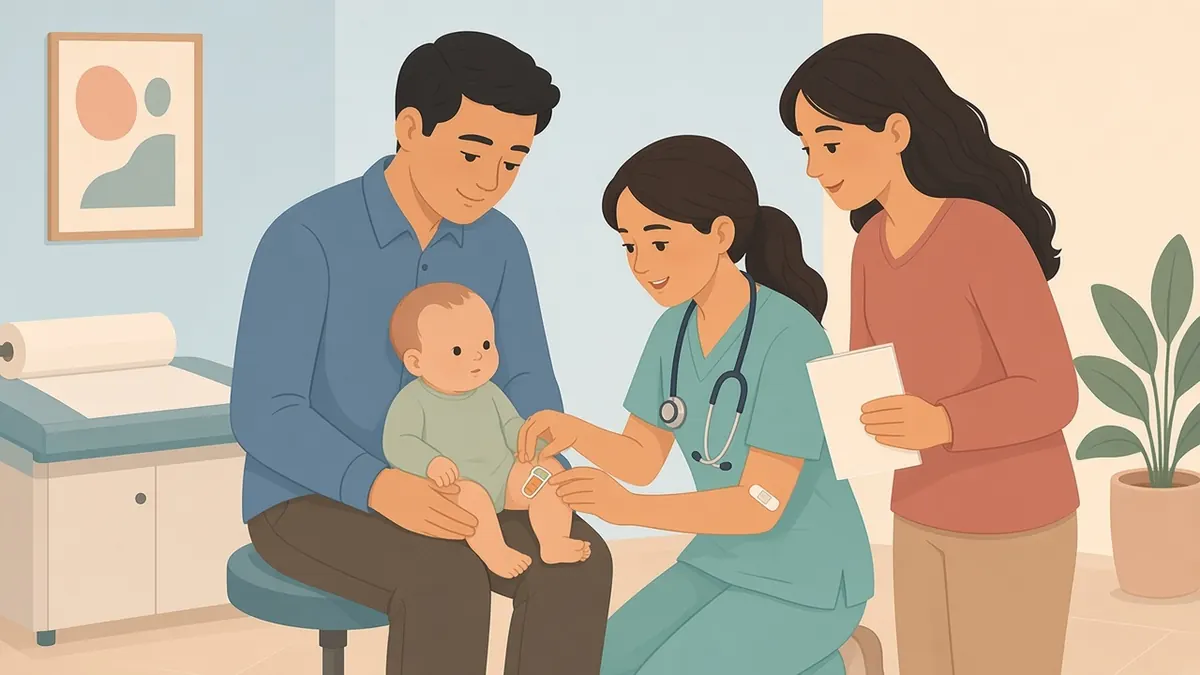
How to support your baby on vaccine day
- Breast or bottle during or right after the shot: sucking and being held helps them settle.
- Easy-off clothes, so you don't have to fully undress them at the clinic.
- A calm voice: babies pick up a lot on how you're feeling.
- The vaccination card (or a photo of it), so each dose gets recorded.
- Afterwards, extra cuddles and feeds on demand; it's normal for them to sleep or eat differently that day.
Back home, log the vaccine in Alfonso and bring the history to the next checkup: with the PDF report for your pediatrician you have vaccines, checkups and the rest of the routine in one place.
Pediatric checkup timeline — a real screen from the Alfonso app.
Start logging today
Create your baby's profile in 30 seconds, no account or password needed, and log the next event as it happens — to see the real pattern, not just remember it. Syncs automatically with your partner.


Frequently asked questions
Why does the vaccine schedule change by country?
Each country sets its schedule based on local epidemiology and its own public health criteria — the ages are quite similar, the specific vaccines vary.
What do we do if we move countries mid-schedule?
Bring the full record to the first appointment — it can be matched up by comparing ages and vaccine types, no need to start over.
What happens if we fall behind on a dose?
Usually there's no need to restart the schedule — it picks up from the missed dose, as the pediatrician decides.
Can my baby get vaccinated with a cold?
In general, a mild cold isn't usually a reason to postpone a vaccine, but your pediatrician or the vaccination team decides at the time, depending on how your baby is doing. If they have a fever or seem unwell, mention it beforehand.
Should I give my baby something before the shots for pain or fever?
Not without your pediatrician's advice. Breastfeeding or bottle-feeding and holding your baby helps them settle; any medicine, before or after the vaccine, only if your pediatrician recommends it.
Keep reading
ℹ️ This article is informational and doesn't replace your country's official vaccination schedule or a pediatrician's judgment. Always check your local health system's current calendar for the exact vaccines, doses, and ages that apply.