
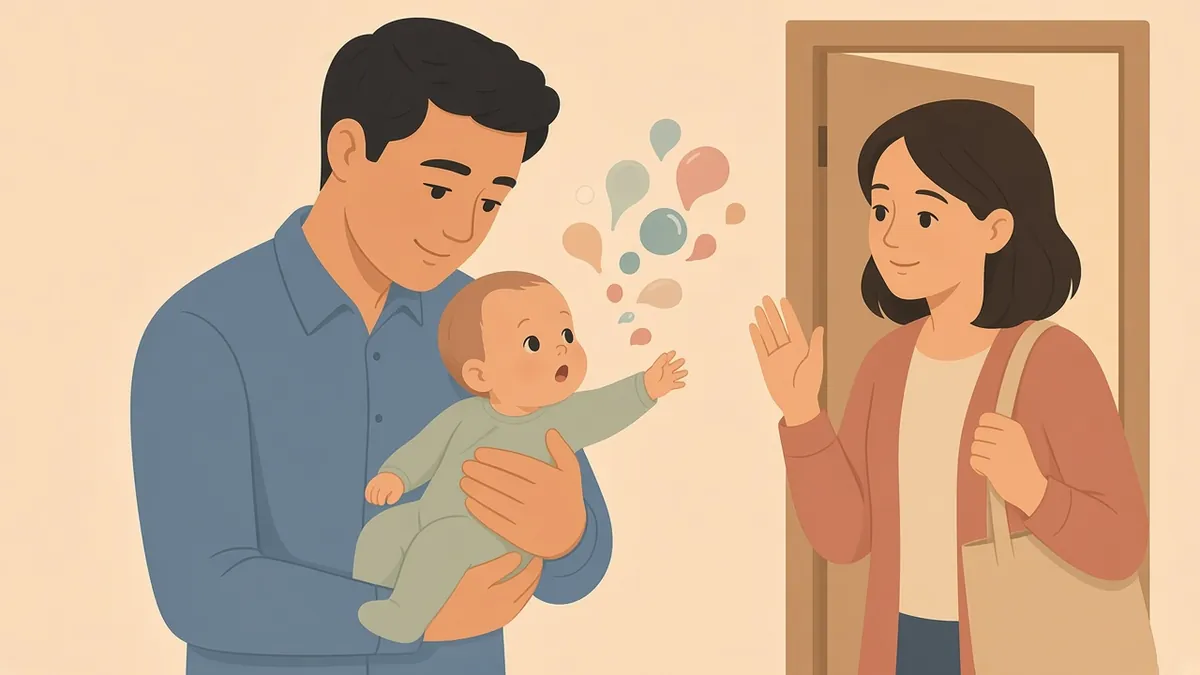
Not long ago they'd go to anyone's arms, and suddenly they cry inconsolably the moment you leave the room, cling to you when grandma arrives, or wake at night looking for you. If your baby is around 8 to 10 months, it is most likely separation anxiety: a normal stage of development, not a tantrum or something you did wrong.
What is separation anxiety?
It is the distress a baby feels when separated from their main people, especially whoever cares for them most. It shows up because their brain has taken a leap: they now understand you still exist when they can't see you (called object permanence), but they don't yet understand you'll come back and have no sense of time. To them, you leaving is a real loss in that moment.
It's a sign that the bond is working: your baby knows who their safe place is and calls for it.
At what age does it start and how long does it last?
Many babies start showing it around 8 to 10 months, though some show it earlier and some barely at all. It tends to come and go in waves, and in many children it returns strongly at times of change (starting daycare, moving, a new sibling). Over time, as they learn you always come back, it becomes easier to handle.
To place it among the other milestones of that age, see baby development month by month.
How do you recognize it?
- Cries or protests when you leave their sight, even just to go to the bathroom.
- Clings to you around new people or even familiar ones they don't see often (often called "stranger anxiety").
- Wakes at night more than before and only settles when they see you.
- Follows you crawling around the house or gets nervous if you move away.
- Settles fairly quickly once you've gone and a trusted person comforts them, or when you come back.
What helps? What actually works
- Always say goodbye, short and warm. A kiss, "bye, I'll be back" and go. Sneaking out seems easier but usually increases insecurity: they learn you can vanish at any time.
- Create a goodbye ritual that's always the same: the same phrase, the same wave from the door. Repetition gives predictability.
- Practice short separations at home: go to another room while talking to them, come right back. Playing peekaboo teaches, through play, that what goes away comes back.
- Leave them with someone familiar and give them time to warm up before you go. If they are starting with a nanny or daycare, do a gradual transition. Our guide for grandparents and caregivers can help everyone follow the same routines.
- Keep routines for meals and sleep as steady as you can.
- Stay calm. Babies read our mood: if they see you relaxed when you say goodbye, you're telling them everything is fine.
- A comfort object (a small blanket or soft toy) can keep them company during the day. For sleep, remember that under 12 months the crib should be free of soft objects.
What about at night?
Separation anxiety often coincides with night waking and with a sleep regression at that age. A predictable bedtime routine helps a lot, as does going in when they cry so they know you're there, and soothing them calmly without lighting up the whole house. If they wake up crying often, there are more ideas in baby wakes up crying.
What to avoid
- Leaving without saying goodbye while they're distracted.
- Dragging out the goodbye by coming back again and again: it usually makes it harder for both of you.
- Scolding or mocking the crying ("don't be a crybaby"). What they feel is real to them.
- Feeling guilty for leaving. Going away for a while and coming back is exactly what teaches them they can trust.
Does it mean they're "spoiled"?
No. Responding to their need for closeness doesn't spoil them; on the contrary, a baby who feels secure usually dares to explore more. Separation anxiety isn't about how you're raising them, but about how their brain is maturing.
When to call the pediatrician
- The crying never settles, not even when you return or a trusted person comforts them.
- You notice they have lost skills they already had (stopped babbling, making eye contact, responding to their name).
- They seem uninterested in interacting with people, with no smiles or eye contact.
- Along with the crying there is fever, vomiting, refusal to feed or they seem unwell: it may be something else.
- The anxiety is so intense that it heavily affects family life or you feel overwhelmed.
Sharing the log with caregivers — a real screen from the Alfonso app.
Let whoever cares for them know how the day is going
With Alfonso you share your baby's log with your partner, grandparents or nanny: they see when they ate, how long they slept and any notes you left. Fewer explanations at the door, shorter goodbyes. No account or password.


Frequently asked questions
At what age does separation anxiety start?
In many babies it appears around 8 to 10 months, though each one has their own pace and it may come earlier or barely be noticeable.
How long does it last?
It comes and goes in waves and usually gets easier over time, as the baby learns you always come back. It can return at times of change.
Is it better to leave without them seeing?
Not really. A short, warm goodbye gives predictability; disappearing in secret tends to increase insecurity.
Am I spoiling them if I pick them up every time they cry?
No. Responding to their need for closeness gives them security, and a secure baby usually explores more.
When should I see the doctor?
If the crying never settles, if they have lost skills they had, if they seem uninterested in people, or if there are other symptoms like fever.
Keep reading
ℹ️ This article is for information only and does not replace a pediatrician's judgment. If you have any doubts about your baby's development or behavior, always check with a health professional.